
How to Rank in Google AI Overviews — Step by Step Guide for Businesses

Summarize or Share at:
The Search Result Nobody Warned You About
Open Google right now and search for almost anything. Before you see a single blue link, before you see any ads, before any traditional result — there is a box at the top. It has a short answer written in plain English. It has a few source website names listed on the side.
That box is a Google AI Overview. And for most searches, it is the only thing most users ever read.
Think about what that means for your business.
You could be ranking number one on Google — years of SEO work, thousands spent, hundreds of pages written — and a user searching your exact keyword reads the AI answer at the top and leaves without ever scrolling to your link.
This is not a future problem. It is happening right now.
As of April 2026, Google AI Overviews appear on 48% of all Google searches — up from 31% just twelve months ago. That is nearly half of every search performed on the internet. Organic click-through rates drop between 34 and 61 percent when an AI Overview appears above traditional results.
But here is what changes everything: the brands that get cited inside those AI Overviews do not lose traffic. They gain it. Traffic coming from an AI Overview citation converts at 14.2% — compared to just 2.8% for standard organic search. That is a five times better quality visitor, already pre-qualified by Google’s AI before they land on your page.
This guide is about getting your business into that box. Not below it. Inside it.
What Exactly is a Google AI Overview?

A Google AI Overview is an AI-generated summary that appears at the very top of search results in response to a question or query. Google’s Gemini model reads dozens of websites simultaneously, pulls out the most relevant and trustworthy information, writes a plain-English answer, and displays it — with a handful of source citations listed beside it.
Those source citations are the goal. That is your business name appearing at the very top of Google, before any traditional ranking, with Google itself endorsing your content as a trusted source.
AI Overviews appear most often for informational queries — questions that begin with how, what, why, which, when. According to Ahrefs data, informational search intent keywords produce AI Overviews 99.2% of the time. But they are increasingly appearing on commercial and service-based queries too, particularly in professional services, marketing, technology, and healthcare.
If your customers are asking questions before they buy — and they always are — Google AI Overviews are showing up on those searches.
Step 1 — Write Every Answer Before You Write the Explanation
This is the most important change you can make. It costs nothing and you can start today.
Google’s AI selects content based on one primary criterion: clarity. The AI is looking for pages where the main answer is immediately clear, self-contained, and easy to extract without needing to rewrite or reinterpret anything. If your answer is buried three paragraphs down after background context and marketing language, the AI moves to a cleaner source.
The fix is straightforward. Lead every section with the direct answer. Put the explanation after.
Here is the difference in practice.
Written for traditional SEO:
“In today’s highly competitive digital landscape, businesses of all sizes are realising the importance of establishing a strong online presence. Search engine optimization has evolved significantly over the past decade, and companies that fail to adapt risk being left behind…”
Written for AI Overview citation:
“Search engine optimization (SEO) is the process of improving a website’s visibility in Google search results to attract organic traffic. It works through three areas: technical optimization, content relevance, and backlink authority.”
The second version gives Google’s AI a clean, complete, extractable answer in two sentences. That is the version that gets cited.
Go through your five highest-traffic pages this week. Find every section heading. Make sure the first paragraph under each heading directly and completely answers the heading as a question. That single change, done consistently, is the foundation of everything else in this guide.
Step 2 — Structure Your Content So AI Can Navigate It
Research consistently shows that AI Overviews favor pages with clear heading hierarchies, scannable formatting, and short paragraphs. Pages cited in AI Overviews tend to have titles and headings that closely match the exact question a user typed.
This means your H2 and H3 headings need to be written as questions or direct statements that mirror real searches — not as creative section titles.
Instead of: “Our Methodology”
Write: “How Does Google AI Decide Which Sources to Cite?”
Instead of: “Key Benefits”
Write: “What Are the Benefits of Appearing in Google AI Overviews?”
Keep paragraphs to three or four lines. Use numbered lists for any process or steps — AI extracts numbered lists very cleanly. Use bullet points for features or comparisons. Bold your key definitions and statistics.
Use natural language and varied phrasing throughout. Do not repeat the same keyword phrase in every paragraph. Include related expressions and synonyms. This signals to Google’s AI that your content offers a well-rounded, genuinely knowledgeable take on the topic rather than keyword-stuffed text.
Step 3 — Add an FAQ Section to Every Key Page

This single step has more impact on AI Overview citation than almost anything else you can do.
Add a FAQ section with five to eight questions and direct answers to every service page and blog post on your website. Write the questions in the exact conversational language your customers actually use — not polished marketing copy.
For a digital marketing agency, the FAQs on an SEO service page might look like:
What is SEO and how does it work for businesses in India?
How long does SEO take to show results?
What is the difference between SEO and Google Ads?
What is AI SEO and do I need it in 2026?
How much does SEO cost for a small business?
Each FAQ answer, when written as a clear two-to-four sentence direct response, becomes a standalone citable unit for Google’s AI. The AI reads your FAQ section and sees structured, question-answer pairs that it can lift directly into an Overview response.
To maximise this, mark up every FAQ section with FAQPage schema — a small piece of technical code that tells Google’s systems exactly where your questions and answers are. We cover schema markup in detail in Step 5 below. You can read more about how Answer Engine Optimization works and why FAQ structure is central to it.
Step 4 — Target Featured Snippets First
If a page holds a Featured Snippet, there is a 60% chance it will also appear in a Google AI Overview. Featured snippets and AI Overviews are deeply connected — the same content structure that wins a featured snippet also wins AI citation.
To optimize any page for featured snippets:
- Phrase an H2 heading as the exact question users search
- Answer it directly in the first paragraph beneath the heading — in 40 to 60 words
- Use definition format for conceptual content: “X is a [type] that [does what]”
- Use numbered steps for process content
- Use comparison tables for versus content
If you are already ranking in the top five positions for a keyword, a featured snippet and AI Overview citation are achievable with the right content structure. If you are ranking between positions six and fifteen, target long-tail, more specific versions of the keyword first — these have lower competition for both featured snippets and AI citations.
Step 5 — Implement Schema Markup on Every Key Page
Structured data tells Google’s AI exactly what your content is, who wrote it, what it covers, and why it is trustworthy. While schema markup alone does not guarantee AI Overview inclusion, it significantly improves eligibility by reducing the interpretation effort Google’s systems need to do.
The schema types that most directly support AI citation are:
FAQPage Schema — for all FAQ sections on service pages and blog posts. This is the single highest-priority schema for AI visibility.
Article Schema — for every blog post. Include the author name, publication date, organisation name, and a short description.
Organization Schema — on your homepage. Tells Google who your business is, what services you provide, where you are located, and how to contact you.
HowTo Schema — for any step-by-step content. Google’s AI extracts HowTo structured content at a much higher rate than unstructured paragraphs.
BreadcrumbList Schema — on all pages. Helps Google understand your site structure and content relationships.
If you are on WordPress, AIOSEO allows you to implement all of these through a settings panel without writing any code. Our AI SEO services include full schema implementation as part of the technical optimization layer.
Step 6 — Build Topical Authority Through Content Clusters
One well-written blog post about SEO will not earn consistent AI citation. Twenty interlinked, well-structured pieces covering all aspects of SEO — strategies, tools, updates, case studies, FAQs — will signal to AI models that your website is a genuine authority on the subject.
This is the content cluster approach. It works like this:
Write one comprehensive pillar page on a core topic. Then write eight to ten supporting blog posts that each cover a specific aspect of that topic. Every supporting post links back to the pillar page. The pillar page links out to the supporting posts. Together they form a network that tells Google — and Google’s AI — that your website covers this subject in genuine depth.
By optimizing pages with topical cluster architecture, businesses have seen their content enter AI Overview panels and reverse expected traffic losses on strategic keywords. The key is not producing more content. It is producing connected content that reinforces a single area of authority.
Step 7 — Build E-E-A-T Signals On and Off Your Website
E-E-A-T stands for Experience, Expertise, Authoritativeness, and Trustworthiness. It is the framework Google uses to evaluate whether a source is credible enough to be cited in an AI Overview. A page with strong E-E-A-T signals gets cited. A page that looks anonymous, generic, or unverified does not.
E-E-A-T is built through consistent signals across your entire online presence — not through a single optimization.
On your website:
Add a proper author bio to every blog post. Include the author’s name, job title, years of experience, and a link to their LinkedIn profile. An anonymous blog post has significantly lower citation rates than one with a named, credentialed author.
Add “Last Updated” dates to all key pages. Outdated statistics and old dates reduce AI trust signals. Refreshing a 2024 guide with 2026 data can restore AI Overview visibility even when traditional rankings stayed the same.
Add original data wherever possible. Case studies, client results, test outcomes, and firsthand observations are content only you can produce. Google’s AI cannot generate this content itself — it has to cite you for it.
Display genuine reviews and client testimonials with names, companies, and ideally star ratings.
Off your website:
Get listed on Clutch, GoodFirms, DesignRush, and TopDevelopers. Each verified listing is an authority signal that Google’s AI cross-references when evaluating your credibility.
Respond to journalist queries on HARO and Qwoted. A single media mention in a reputable publication is worth more as an authority signal than dozens of generic directory listings.
Build consistent Name, Address, Phone (NAP) citations across the web. Inconsistency in how your business is described online confuses AI systems and reduces citation likelihood.
Step 8 — Keep Your Technical SEO Foundation Strong
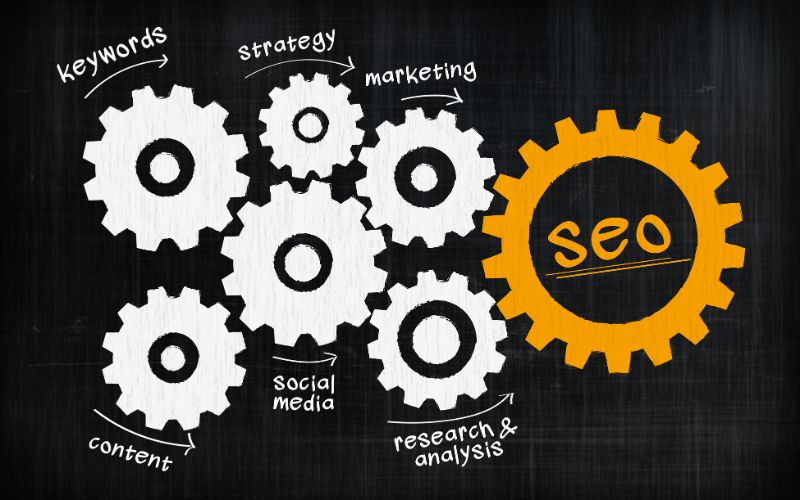
Google’s AI cannot cite a page it cannot crawl. Technical SEO is the non-negotiable foundation beneath everything else in this guide.
The technical requirements for AI Overview eligibility are the same as strong traditional SEO — but they matter more now because a single crawl error or slow loading page can remove you from consideration entirely.
Check these items:
- Site speed under three seconds on mobile — test at PageSpeed Insights
- Core Web Vitals passing in Google Search Console — LCP, CLS, and INP all green
- No crawl errors or blocked pages in Search Console Coverage report
- Clean internal linking with no broken links
- XML sitemap submitted and error free
- No duplicate content or thin pages
- Content not dependent on JavaScript rendering — Google’s AI prefers static, immediately visible HTML content
If your Search Console is showing 404 errors or coverage issues, address these before investing in content optimization. A technically unhealthy site limits AI citation eligibility regardless of how well the content is written.
Step 9 — Track Where You Appear and Where You Don’t
You cannot improve what you are not measuring. Google has made AI Overview performance data more accessible in 2026. AI Mode data now counts toward totals in Google Search Console — clicks from AI Overview citations count as clicks, and page appearances in AI responses count as impressions.
Here is a practical monthly tracking process:
Open Google Search Console and go to Search Results. Look for pages that have high impressions but declining click-through rates. Those are the pages most likely being affected by AI Overview displacement — they are appearing in search but losing clicks to the AI answer above them. These pages are your highest-priority optimization targets.
Manually search your ten most important target keywords in Google. Note whether an AI Overview appears. Note whether your website is cited inside it. If a competitor is cited and you are not, study their page structure — look at their headings, FAQ section, answer format, and schema markup.
Create a simple tracking spreadsheet. Update it monthly. Over time this gives you a clear picture of your AI citation growth and the specific pages and keywords where you need to do more work.
For more structured tracking, tools like SEMrush AI Toolkit and Otterly. AI monitor citation patterns across AI platforms automatically.
Common Mistakes That Prevent AI Overview Citations
Understanding what not to do is as important as the steps above.
Putting the answer too far down the page.
If the direct answer to a question appears after three paragraphs of context and introduction, Google’s AI will choose a page that leads with the answer instead.
Writing generic content that AI can produce itself.
If your content only summarises what is already widely known, there is no reason for the AI to cite you — it can write that summary itself. Your competitive advantage is original data, firsthand experience, specific case studies, and expertise that only you have.
Ignoring author information.
Anonymous content is less trusted by Google’s AI. Named authors with verifiable credentials earn significantly higher citation rates.
Not updating content regularly
A page last updated in 2023 or 2024 with outdated statistics is less likely to be cited than a freshly updated version with 2026 data.
Skipping schema markup
Unstructured content requires more interpretation effort from Google’s AI. Structured data removes that friction and increases eligibility.
Having no internal links
Isolated pages without connections to related content appear less authoritative. Internal links are how you communicate your topical depth to both Google and its AI systems. Read our guide on why your website is not getting leads despite traffic for more on how internal structure affects both rankings and conversions.
Frequently Asked Questions
1. What is a Google AI Overview?
A Google AI Overview is an AI-generated summary that appears at the top of Google search results. Google’s Gemini model reads multiple websites and synthesises a direct answer, displaying it before traditional organic results. Source websites are cited beside the summary.
2. How do I know if Google AI Overviews are appearing for my keywords?
Search your target keywords in Google and look for the AI-generated summary box at the top of results. You can also check Google Search Console — pages with high impressions and declining CTR are often being affected by AI Overview displacement.
3. Does my website need to rank on page one to appear in Google AI Overviews?
Top 10 rankings correlate strongly with AI citations, but they are not a strict requirement. Some lower-ranking pages are cited when their content structure, authority signals, and answer clarity are stronger than higher-ranked competitors.
4. How long does it take to appear in Google AI Overviews?
Most businesses see initial AI Overview citations within two to four months of implementing content structure improvements, schema markup, and E-E-A-T signals. Timelines vary based on competition and existing domain authority.